

Imagine trying to hire someone and needing weeks just to figure out who is actually qualified.
You post a job, get flooded with resumes, review them late at night, and still feel unsure if the right person is in that pile. Sounds familiar, right?
That’s the reality for many companies in the US today. Teams are spread across cities, states, and even remote offices, while roles and skills evolve faster than ever. Yet most hiring processes haven’t caught up.
You open a role and wait. Applications come in, but many don’t match what you need. At the same time, strong candidates get lost in the crowd, and positions stay open longer than planned.
Job seekers feel it too. They apply to multiple roles and often hear nothing back. Their resumes sit in large systems where key skills may not stand out. Both sides put in effort, but the process still seems slow and uncertain.
So why does hiring still work like this?
More US companies are exploring smarter solutions. Platforms where artificial intelligence helps screen and match candidates before a recruiter even steps in—often called an AI talent marketplace, are on the rise. These systems help companies find skilled professionals faster while concentrating on actual ability.
Table of Contents
What Is an AI-Vetted Talent Marketplace
An AI-vetted talent marketplace is a platform that uses technology to screen and match candidates based on skills, experience, and project history. Instead of reviewing every resume manually, the system organizes and scores candidate data, giving you a better understanding of who fits your role.
Candidates create profiles with their skills, work history, and sometimes work samples or assessments. The platform reviews this information and compares it to your requirements, producing a shortlist of strong matches.
You still make the final hiring decisions, but you start with a pre-vetted talent pool instead of sorting through hundreds of resumes. This saves time and ensures you focus only on candidates who are ready and qualified for your role.
Why Traditional Hiring Is Under Pressure
Traditional hiring in the US is slowing companies down. Filling a job now takes about 35–44 days on average, yet top prospects often accept offers in just 10 days. This means many good prospects are gone before hiring even finishes.
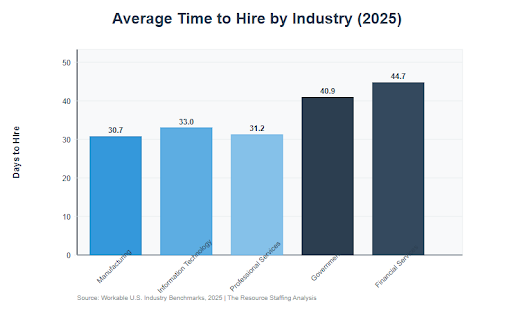
Slow hiring also adds cost. Companies spend roughly $4,700 per hire, and vacant roles reduce productivity. When a hire fails, it can cost up to 30% of that employee’s first-year pay. Recruiting costs can even reach several times the salary for hard-to-fill roles.
Talent shortages make things worse. Over 90% of US companies face critical skills gaps, especially in tech, AI, and cybersecurity, while 69% struggle to fill full-time positions. These gaps could cost the US economy billions in lost revenue and productivity by 2026.
Long timelines, rising costs, and ongoing skill shortages are putting real pressure on traditional hiring.
The Reasons for Rise of AI-Vetted Marketplaces in the US
Several distinct points are driving the rise of AI-vetted talent marketplaces in the US. You may already notice some of these changes in your own workplace.
-
Market Expansion
The US AI recruitment market reached $157.46 million in 2024 and is projected to grow to $328.73 million by 2035. Companies are realizing that investing in AI hiring tools can dramatically improve speed and output. The growth shows that more organizations are willing to embrace technology to fulfill evolving employee demands and stay competitive.
-
High Adoption Rates
Around 84% of US hiring processes now rely on AI in some form. This adoption stabilizes the $183.3 billion staffing industry by making hiring cycles more predictable. Companies can forecast when roles will be filled, reduce delays, and better plan resources, all while guaranteeing that candidates who apply are more likely to meet the requirements.
-
Remote and Hybrid Work
You’re no longer limited to hiring candidates near your office. Hiring across the country opens the door to a larger talent pool, but it also creates more applications to sort through. AI platforms help you rank candidates efficiently, making sure that even with hundreds of applicants, you can identify the strongest matches without spending days reviewing every resume manually.
-
Skills Matter More Than Degrees
Employers are now focusing more on what candidates can do rather than where they went to school. AI systems are able to analyze detailed skill data, certifications, and project work to ensure the right match for each role. This shift helps companies identify talent that may have been ignored in traditional hiring while guaranteeing candidates are truly qualified for the work at hand.
-
Faster Hiring Needs
Open roles can delay projects, product launches, or customer service. AI-vetted marketplaces reduce time spent on early-stage screening, allowing you to schedule interviews faster and secure top talent before it’s gone. This allows you to schedule interviews faster and make offers before top candidates are off the market, keeping your projects and business goals on track.
-
Data-Driven Decisions
AI-supported hiring platforms give structured knowledge of candidate fit, similar to how businesses rely on data in sales, marketing, or finance. By reviewing data on skills, past performance, and role alignment, you can make decisions based on measurable criteria rather than gut instinct, resulting in more consistent and reliable hiring outcomes.
-
Platform Dominance & Investment Surge
Leading platforms such as Zeero, HireVue, and HiredScore are transforming recruitment with video analytics, skill assessments, and bias-reduced screening. Around 67% of US firms now use AI in recruitment, and 75% rank it highly as a top HR technology investment. This shows that companies are seeing AI not as an experiment but as a core tool for finding and retaining talent.
-
Talent Shortage & Skills Demand
AI-related job postings grew sevenfold from 2023 to 2025, with over 4 million roles unfilled. Talent shortages, particularly in AI, tech, and cybersecurity, push companies to use AI-vetted marketplaces to quickly access pre-screened, qualified professionals. These platforms also make it easier to find flexible, contract, or project-based talent that fits immediate needs, decreasing the risk of keeping critical roles open too long.
Together, these trends show why more companies across the US are adding AI-supported platforms to their hiring strategy.
Why This Matters?
Moving to an AI-vetted talent marketplace isn’t just about hiring faster; it’s about staying adaptable and prepared for whatever lies ahead.
Skills change quickly, project needs shift weekly, and workers want more flexibility than ever. Old hiring methods can’t keep up. If you want to attract the best people, you need to rethink hiring.
That means:
- Spending less time posting jobs and more time pairing the right person to the right role.
- Cutting down on manual processes and making the hiring process easy and simple.
- Moving away from slow, outdated job boards and toward an on-demand, almost “Netflix-style” hiring experience.
Companies that make this shift don’t just hire faster; they work smarter. They become more agile, attractive to top talent, and set to adapt when things change. When the right people are easy to find and hire, everyone wins.
Ready to hire smarter and faster? Explore the Zeero AI talent marketplace today and access a pre-vetted talent pool to find the right candidates for your US-based roles instantly.